

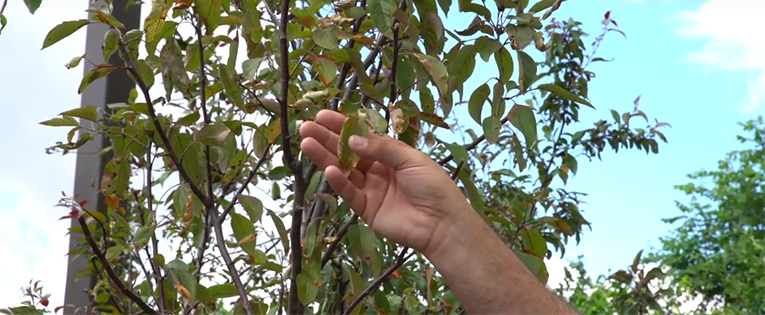
Plant Health Care (PHC) can involve a wide range of services with the expressed aim of improving or maintaining the health of your trees and shrubs through preventative actions. Of these services, one of the most important is the control of harmful plant pests.
Early detection of harmful pests is the key to controlling outbreaks that may injure or kill trees and shrubs. Early detection can be achieved by having your plants monitored by Ontree’s PHC specialists.
Although there are many small creatures that are associated with trees, few are actually pests that cause harm. Of those that can harm a tree, many can be controlled through simple techniques such as pruning or manual removal. Others may require further types of control such as a chemical application or implants. Wherever possible, chemicals used by Ontree are environmentally safe, low or non-toxic products such as soap, oil, Tree Azin or copper.
Some of the more common pests that afflict trees and shrubs in southern Ontario include:
Insects:
- aphids
- birch leaf miner
- bronze birch borer
- cedar leaf miner
- eastern tent caterpillar
- elm leaf beetle and miner
- emerald ash borer
- euonymus scale
- gypsy moth
- honey locust leafhopper and plant bug
- magnolia scale
- spruce sawfly
Diseases:
- anthracnose
- apple scab
- diplodia tip blight
- Dutch elm disease
- fireblight
- nectria canker
- pear trellis rust
The pests listed above can injure your plants to various degrees ranging from minor (largely aesthetic) to major (up to death). The degree of injury will be related to the type of pest, the condition of the host plant, the severity of the infestation and, perhaps most important, the time of discovery. Generally, the earlier a pest is discovered, the easier it is to control and the less injury it will cause.
Symptoms and signs of a pest attack in your plants can include slower growth, poor vigour, dead and dying branches, chewed or discoloured leaves, early defoliation, webbing or other nests, sticky residue or the actual presence of the pest. Contact Ontree if you notice anything unusual in the growth habits of your plants.
Most Commented Posts