

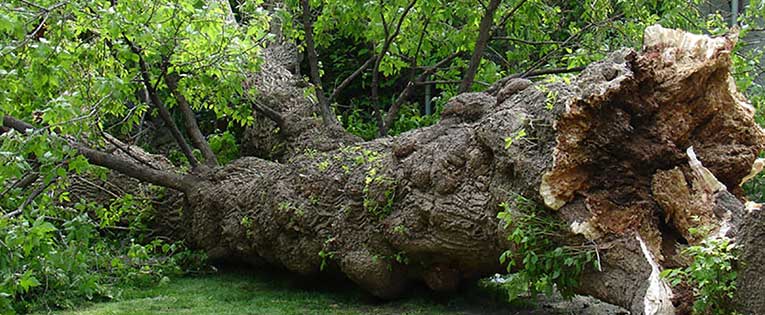
Intervening to reverse the decline of a tree is Ontree’s most satisfying service. Assessing the reasons for a tree’s decline, prescribing and implementing a treatment program, and monitoring a tree as it revitalizes over time are actions that define the purpose of arborists. Ontree is well versed in this service and looks forward to taking on the challenges of preserving trees in an urban environment.
Tree restoration is a service that brings together many of the other services Ontree offers. Diagnosing the causes of a tree’s decline, and creating and implementing a plan to reverse a tree’s decline, brings together some or all of the services of diagnosing, pruning, plant health care, soil amendments and fertilizing.
Correctly diagnosing the causes of a tree’s decline is critical to prescribing the correct treatment. For example, frequently a pest associated with a tree is not the cause of the tree’s decline, but is merely a secondary opportunistic problem. In other words, eliminating a pest may not noticeably improve a tree’s health. Ontree’s ISA Certified Arborists can help detect the root cause of a tree’s affliction and prescribe appropriate solutions.
Once the causes of a tree’s decline are identified, it is then possible to map out a route for treatment. Such treatments should aim at eliminating or mitigating the causes of decline, while at the same time treating the symptoms of decline. For instance, a tree located in soils recently compacted by construction could be showing symptoms of decline in the form of dieback, reduced vigour, and leaf discolouration. A prescription for this tree would focus on aerating the soil to reduce compaction (eliminating the cause), pruning the deadwood and fertilizing with a low nitrogen fertilizer (treating the symptoms), and watering.
Early intervention is an important determining factor in a tree’s ability to respond well to prescribed treatments. The further along a tree is on the path of decline, the more difficult it is to bring back to good health. If you have reasons to suspect your tree may be in decline, or even better, if you are interested in preventing decline, contact Ontree for advice.
Most Commented Posts