

• Home
  • About Us
  • Services
    • Tree & Shrub Pruning
    • Tree & Stump Removal
    • Plant Health Care
    • Arborist & Consulting
    • Tree Restoration
    • Soil Amendments & Fertilizing
  • Commercial
  • News
  • FAQs
  • Contact Us
OntreeOntree
  • Home
  • About Us
  • Services
    • Tree & Shrub Pruning
    • Tree & Stump Removal
    • Plant Health Care
    • Arborist & Consulting
    • Tree Restoration
    • Soil Amendments & Fertilizing
  • Commercial
  • News
  • FAQs
  • Contact Us

Tree fertilizing and aerating

Tree fertilizing and aerating

Tree fertilizing and aerating

April 2, 2014 Latest News No Comments

Frequently asked questions about tree fertilizing and aerating


Fertilizing brings to mind farmers spreading manure on their fields, but trees and shrubs in urban areas also often require help with getting all their food requirements met. Soils in urban areas are often poor, having been scraped away during construction. The usual build-up of leaf litter that is common in forests and adds nutrients to the soil can be largely missing in urban areas.

Our most commonly applied fertilizer has a high percentage of nitrogen and is applied in spring, early summer or fall. This fertilizer is ‘slow release’ and will be available to the tree for two full years. Alternatively, a tree may require a prescription fertilizer to respond to a specific mineral deficiency. In either case, fertilizer is applied in the same manner: the fertilizer is added to water in a mix tank and applied under pressure through a fertilizing probe directly to a tree’s root zone.

I fertilize my grass. Do I also need to fertilize my trees?
Yes. First, grass fertilizers contain low amounts of nitrogen that are insufficient for a tree’s needs. Second, grass fertilizers are generally not available to tree roots. Grass roots are found in the top 2-4” of soil, whereas a tree’s absorbing roots are deeper in the soil, usually in the 4-12” range. By using a fertilizer probe, we can apply fertilizer directly to a tree’s root zone.

I had my trees fertilized last year. Should I fertilize again this year?
Not if the fertilizer is slow release. This type of fertilizer will last for two years. Ontree uses slow release fertilizer.

I use fertilizer spikes. Are these good for my trees?
While many garden centres recommend fertilizer spikes for trees, we do not. Fertilizer spikes pose the same problems for trees as do grass fertilizers: insufficient nitrogen levels and inability to reach a tree’s root zone. Additionally, if not sufficiently watered fertilizer spikes can damage grass and other plants.

Are fertilizers toxic?
The fertilizers used by Ontree are manufactured by Plant Products and when applied by our trained staff, are not toxic to humans, animals or plants. Once applied, it is safe for people or pets to be in the fertilized area.
Save

Save

Save

Save

No Comments
Share
5

You also might be interested in

Info Bulletin: Diplodia Tip Blight

Info Bulletin: Diplodia Tip Blight

Jun 21, 2012

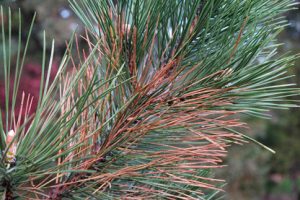
Diplodia is one of the most common and serious diseases of Austrian pines. It is caused by a fungus which becomes a destructive pathogen when its host is weakened by external factors. This disease also attacks other two and three needled pines such as mugo, Scots, and red pines.

Info bulletin: emerald ash borer

Info bulletin: emerald ash borer

Oct 10, 2012

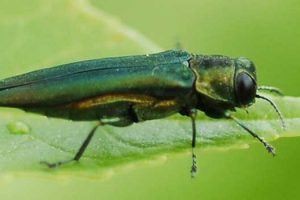
Emerald ash borer The Emerald Ash Borer (EAB) is an[...]

Asian long-horned beetle eradicated from Canada

Asian long-horned beetle eradicated from Canada

Apr 22, 2013

Eradication of the asian long-horned beetle Since the original posting[...]

Leave a Reply

Your email is safe with us.

Most Commented Posts

  • Birch leafminer treatment now available in Ontario By Ontree on February 15, 2013 4
  • Magnolia Scale Neolecanium Cornuparvum By Ontree on August 7, 2015 3
  • Pruning young trees and structural pruning By Ontree on September 8, 2014 2

Recent Comments

  • John Shribbs on Pruning young trees and structural pruning
  • Yuma on Pruning young trees and structural pruning
  • Madeline Walker on Using pesticides on trees
  • Ontree on Birch leafminer treatment now available in Ontario
  • Teressa on Birch leafminer treatment now available in Ontario

Search

Ontree

To preserve the urban forest by adding value, maintaining high standards, and developing relationships.

Contact

Ontree
22 Passmore Ave,
Scarborough, ON M1V 4T1
Phone: 416-412-2100
Email: info@ontree.ca

  • Privacy Policy
  • Site Map

Company

  • Home
  • About Us
  • Services
  • Commercial
  • News & Events
  • FAQs
  • Contact Us

FOLLOW US

Social Icons Widget

© 2026 · Ontree

Prev Next

Press Enter to search · Esc to close